
Sunscreen is the single most important anti-aging and skin-protecting product in your entire routine, yet most people use it in ways that dramatically reduce its effectiveness. Many apply too little, choose the wrong formula, or skip it on days they “don’t see the sun”—and then wonder why pigmentation, fine lines, and sun damage keep getting worse.
This guide breaks down the most common sunscreen mistakes and shows you exactly how to fix them, so your everyday SPF actually does what it promises: protect your skin today and preserve it for the future.
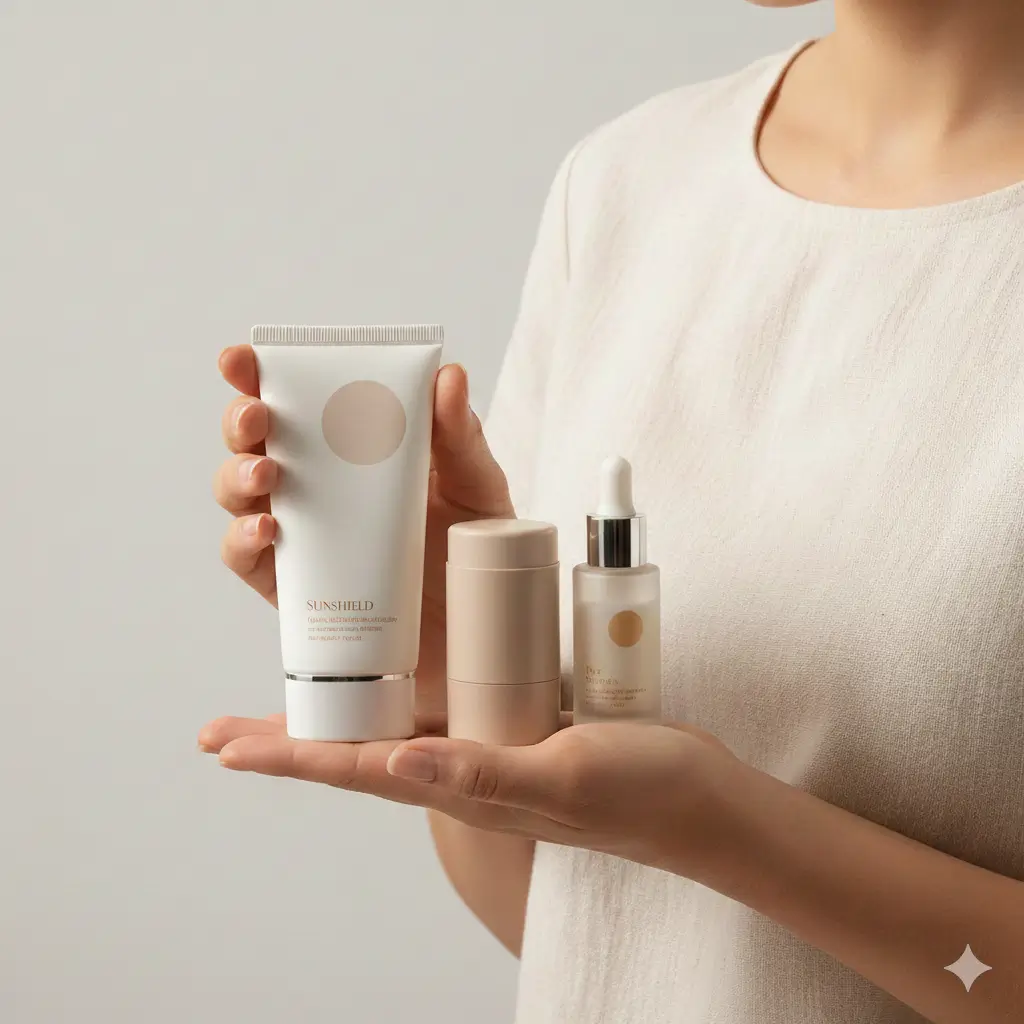
Mistake 1: Using Too Little Sunscreen
Most people apply about half (or less) of the amount used in SPF testing, which means they’re not actually getting the labeled protection level. For the face and neck alone, you need roughly two finger lengths of product or about ¼ teaspoon.
How to fix it:
- Use the “two finger rule”: squeeze sunscreen along the length of your index and middle finger—that’s your minimum for face and neck.
- If using a fluid formula, think in terms of a nickel-sized dollop.
- Don’t “dot” tiny amounts and spread them ultra-thin; your layer needs to be even and visible before you blend.
ALT Image Suggestion: Close-up of two fingers with the correct amount of sunscreen applied along their length.
ALT Text: Correct amount of face sunscreen using two finger rule
Mistake 2: Only Applying Once in the Morning
Sunscreen filters break down with UV exposure, sweat, oil, and friction from clothing or hands. A single morning application is not enough if you’re outdoors for long periods, sweating, swimming, or sitting near windows for hours.
How to fix it:
- Reapply every 2 hours when outdoors or exposed to direct sunlight.
- Indoors but near windows or screens for many hours? Reapply at least once midday.
- Use sunscreen sticks, cushions, or SPF sprays (over a base layer of cream sunscreen) for easier top-ups over makeup.
Pro tip: Keep a small SPF stick or compact in your bag so “I forgot” is never the reason.
Mistake 3: Skipping Sunscreen on Cloudy or Indoor Days
Up to 80% of UV rays can penetrate clouds, and UVA (the “aging rays”) pass through windows, car glass, and office windows. That means skin damage continues even when it doesn’t look sunny or when you’re inside all day near natural light.
How to fix it:
- Treat sunscreen like brushing your teeth: a non-negotiable daily habit, not a “sunny day” product.
- Apply SPF every morning as the last step of your routine, regardless of weather.
- If you work near windows, consider a mineral sunscreen plus sheer curtains or UV-protective films on glass.
Mistake 4: Relying Only on Makeup With SPF
SPF in foundation, BB cream, or cushion compacts is better than nothing—but you’d have to apply a much thicker layer than people realistically use to reach the advertised protection. Most people apply a fraction of the needed amount.
How to fix it:
- Use a dedicated face sunscreen as your primary protection.
- Treat SPF makeup as a bonus, not your main shield.
- If you like tinted coverage, choose a tinted sunscreen as your base, then apply light makeup on top.
Internal link suggestion (anchor text): daily sunscreen routine → your Blog 1 or Blog 8 section on layering.
Mistake 5: Choosing the Wrong Sunscreen for Your Skin Type
The “I hate sunscreen” feeling usually comes from wearing a formula that doesn’t suit your skin type—too greasy, too drying, too chalky, or pore-clogging.
For oily/acne-prone skin:
- Look for “oil-free,” “non-comedogenic,” “gel” or “fluid” textures.
- Matte or semi-matte finishes help control shine.
- Avoid heavy, occlusive textures during the day.
For dry or mature skin:
- Choose cream or lotion formulas with added ceramides, glycerin, or hyaluronic acid.
- Dewy/mineral sunscreens often feel more comfortable.
For sensitive or redness-prone skin:
- Mineral/physical sunscreens with zinc oxide and titanium dioxide tend to be gentler.
- Avoid formulas heavy in fragrance or certain essential oils.
Mistake 6: Not Applying in the Right Order (Or Rubbing It Off)
Sunscreen should be the final step in your skincare routine (before makeup). Applying oils, thick creams, or slippery products on top can dilute or disturb the protection layer.
How to fix it:
- Order: cleanse → treatments/serums → moisturizer → sunscreen → makeup.
- Wait 5–10 minutes after applying sunscreen before putting on makeup to let it set on the skin.
- Apply foundation with a gentle patting motion (sponge or fingers), not aggressive rubbing that can move your SPF.
Mistake 7: Ignoring Key Areas (Neck, Ears, Hairline)
Some of the most common sites for sun damage and skin cancers are areas people forget: ears, hairline, back of neck, and hands.
How to fix it:
- Extend sunscreen down the neck, onto the sides and back of the neck if exposed.
- Cover ears, hairline, and any exposed scalp (or use a spray SPF on the part line).
- Finish with sunscreen on the backs of your hands—especially if you drive frequently.
ALT Image Suggestion: Person applying sunscreen to face, neck, and ears in front of a mirror.
ALT Text: Applying face sunscreen correctly including neck and ears
Mineral vs Chemical Sunscreen: Which Is Better?
Neither is “good” or “bad” across the board—it depends on your skin and preferences.
Mineral (Physical) Sunscreens:
- Filters: zinc oxide, titanium dioxide.
- Sit on top of skin and reflect/scatter UV.
- Pros: great for sensitive skin, work immediately after application.
- Cons: can leave a white cast, especially on deeper skin tones; thicker textures.
Chemical Sunscreens:
- Filters: avobenzone, octisalate, octocrylene, etc.
- Absorb UV and convert it to a small amount of heat.
- Pros: often more sheer and elegant under makeup, better for deeper skin tones.
- Cons: can sting eyes or irritate very sensitive or compromised skin.
Practical takeaway: The best sunscreen is the one you like enough to wear every single day. If a formula feels good and you actually use it consistently, that beats a “perfect” product you avoid.
How to Build a Daily Sunscreen Habit
- Keep SPF next to your toothbrush to anchor it to an existing routine.
- Use textures you enjoy (gel, fluid, cream, tinted) so it feels like skincare, not a chore.
- Take a photo of your face in good lighting now and another in 6 months—you’ll actually see the payoff in fewer new spots and smoother texture.
- Treat hats, sunglasses, and shade as “bonus armor,” not replacements for SPF.
Gentle Disclaimer
Sunscreen reduces the risk of sunburn and signs of photoaging when used correctly and combined with other sun protection measures (shade, clothing, hats, sunglasses). It does not guarantee total protection or prevent all forms of skin cancer. If you notice changing moles, non-healing spots, or suspicious growths, see a dermatologist promptly.
FAQs
1. Is SPF 50 always better than SPF 30?
SPF 30 blocks about 97% of UVB, while SPF 50 blocks about 98%. The difference is small, but SPF 50 offers a bit more buffer if you under-apply or miss spots. Consistent, proper application matters more than chasing the highest number.
2. Do I need sunscreen if my moisturizer has SPF 30?
You can, but only if you apply enough—most people don’t. If you prefer moisturizer with SPF, use a generous amount and consider layering a dedicated sunscreen on top or using SPF makeup as backup.
3. Does sunscreen cause acne?
Some formulas can clog pores, but sunscreen itself doesn’t inherently cause acne. Look for “non-comedogenic,” “oil-free,” and lighter textures, and double cleanse at night to fully remove SPF.
4. Is sunscreen necessary for deeper skin tones?
Yes. Deeper skin tones have more natural protection against burning but are still vulnerable to sun-induced pigmentation, uneven tone, collagen breakdown, and certain skin cancers. Sunscreen also helps prevent dark marks from acne from getting worse.
5. Can I mix sunscreen with moisturizer or foundation to make it lighter?
No. Mixing dilutes the formula and reduces its tested SPF level. Apply sunscreen as a separate, even layer over skincare, then apply moisturizer (if not already used) and makeup on top.