
The anti-aging skincare market is flooded with miracle promises and exaggerated claims. Every brand swears their product will erase wrinkles overnight, reverse decades of damage, or replace cosmetic procedures. The truth? Aging is a natural process you can’t completely stop, but you can significantly slow visible signs with the right ingredients and consistent habits.
This guide cuts through the marketing hype to focus on what dermatologists and scientific research actually prove works. Whether you’re in your late twenties practicing prevention or in your forties addressing established concerns, these evidence-based strategies deliver real, measurable results over time.
Understanding Skin Aging: What’s Really Happening
Skin aging results from two distinct processes that require different approaches:
Intrinsic Aging (Chronological):
This natural, genetically programmed aging happens regardless of external factors. Starting around age 25, collagen production decreases by approximately 1% annually. Your skin gradually becomes thinner, loses elasticity, and produces less oil. Cell turnover slows from every 28 days in your twenties to 45-60 days by your fifties.
Extrinsic Aging (Environmental):
Up to 80% of visible facial aging comes from external factors, with UV exposure being the primary culprit. Sun damage causes photoaging—premature wrinkles, uneven pigmentation, loss of firmness, and broken capillaries. Other contributors include pollution, smoking, poor diet, and chronic stress.
The good news? While you can’t control intrinsic aging, you have significant control over extrinsic factors. This is where strategic skincare makes the biggest difference.
The Core Anti-Aging Ingredients That Actually Work
Skip products with vague “anti-aging complex” claims. These five ingredients have extensive clinical research proving their effectiveness:
Retinoids (Vitamin A Derivatives)
Retinoids are the gold standard for anti-aging, with decades of research supporting their efficacy. They work by:
- Increasing cell turnover to reveal fresher skin
- Stimulating collagen production to reduce wrinkles
- Evening out skin tone and fading age spots
- Improving skin texture and firmness
Options: Over-the-counter retinol (0.25-1%) or prescription tretinoin (0.025-0.1%). Start with lower concentrations 2-3 nights weekly, gradually increasing as tolerance builds.
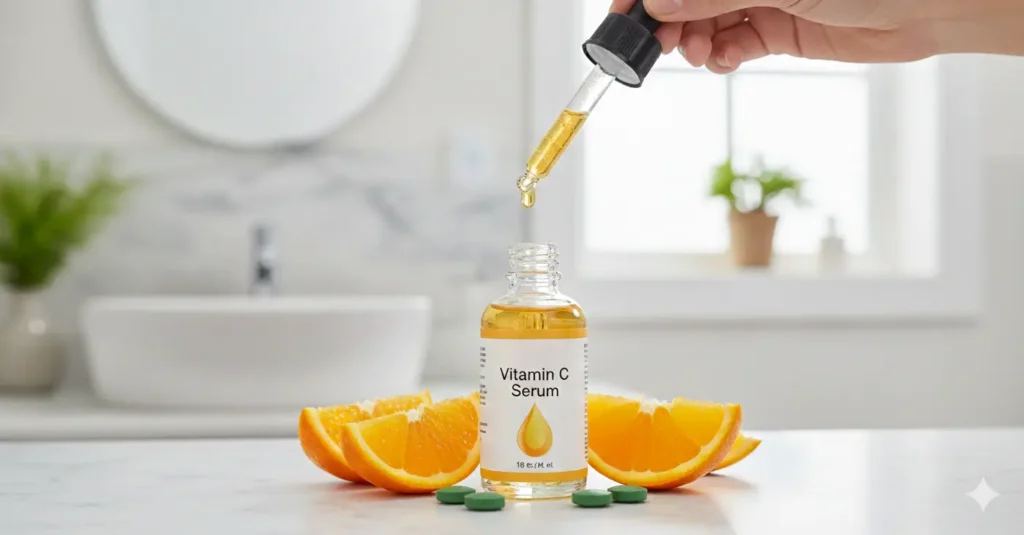
Vitamin C (L-Ascorbic Acid)
This powerful antioxidant protects against free radical damage while brightening skin and supporting collagen synthesis. Look for stabilized formulations with 10-20% concentration in opaque, airtight packaging to prevent oxidation.
Niacinamide (Vitamin B3)
This multi-tasking ingredient improves skin barrier function, reduces inflammation, minimizes pores, and helps fade hyperpigmentation. It’s gentler than other actives, making it suitable even for sensitive skin. Effective concentrations range from 2-10%.
Peptides
These amino acid chains signal your skin to produce more collagen and elastin. While not as potent as retinoids, peptides offer a gentler option for sensitive skin. Look for products containing matrixyl, argireline, or copper peptides.
Alpha Hydroxy Acids (AHAs)
Glycolic and lactic acids exfoliate surface dead skin cells, improving texture, tone, and fine lines. They also enhance penetration of other products. Use 5-10% concentrations 2-3 times weekly, always with sunscreen.
Your Complete Anti-Aging Skincare Routine
Morning Anti-Aging Routine
Step 1: Gentle Cleanse
Use a hydrating cleanser that removes impurities without stripping natural oils. Mature skin produces less sebum, so harsh cleansers accelerate dryness and irritation. Cream or gel formulas with ceramides work well.
Massage cleanser for 60 seconds using gentle upward motions. Rinse with lukewarm water—hot water dilates blood vessels and accelerates moisture loss.
Step 2: Antioxidant Toner
A hydrating toner with antioxidants preps your skin while providing the first layer of anti-aging protection. Look for ingredients like:
- Green tea extract for antioxidant protection
- Hyaluronic acid for hydration
- Rose water for soothing and plumping
Apply with clean hands, patting gently into skin. Wait 30 seconds before the next step.
Step 3: Vitamin C Serum
Morning is ideal for vitamin C because it provides daytime antioxidant protection against UV damage and pollution. Apply 2-3 drops to face and neck, avoiding the eye area if sensitivity occurs.
Store vitamin C in a cool, dark place and replace every 3 months once opened. Oxidized vitamin C turns brown and loses effectiveness.
Pro Tip: If vitamin C causes irritation, try a derivative like sodium ascorbyl phosphate, which is gentler but still effective.
Step 4: Eye Cream
The delicate eye area shows aging first due to thinner skin and constant movement. Use eye creams specifically formulated for this sensitive zone with ingredients like:
- Caffeine for puffiness
- Peptides for firmness
- Hyaluronic acid for hydration
- Light-reflecting particles for brightness
Apply a rice-grain amount with your ring finger, gently patting around the orbital bone. Never pull or stretch this delicate skin.
Step 5: Moisturizer with Peptides
Your daytime moisturizer should hydrate while delivering anti-aging benefits. Look for peptide-rich formulas that support collagen production throughout the day. Lightweight textures work well under sunscreen and makeup.
Apply using upward and outward motions to avoid pulling skin downward. Don’t forget your neck and décolletage—these areas age noticeably but are often neglected.
[Internal Link Suggestion: “Morning Skin Care Routine: 7 Steps for Healthy Glowing Skin”]
Anchor Text: complete morning routine structure
Step 6: Broad-Spectrum Sunscreen SPF 50
Sunscreen is your most powerful anti-aging tool. Daily sun protection prevents new damage while allowing your treatment products to work on existing concerns. Choose broad-spectrum SPF 50 for comprehensive protection.
Apply liberally—most people use too little sunscreen to achieve the stated SPF. Use at least ¼ teaspoon for face and neck. Reapply every 2 hours if outdoors or after sweating.
Physical (mineral) sunscreens with zinc oxide are excellent for mature skin as they don’t require chemical absorption and provide immediate protection.
Evening Anti-Aging Routine
Step 1: Double Cleanse
Start with an oil-based cleanser or micellar water to remove sunscreen and makeup. Follow with your regular cleanser. Thorough cleansing ensures treatment products penetrate effectively.
Step 2: Hydrating Toner
Use the same antioxidant toner from your morning routine, or switch to one with additional hydrating ingredients for overnight moisture.
Step 3: Retinoid Treatment
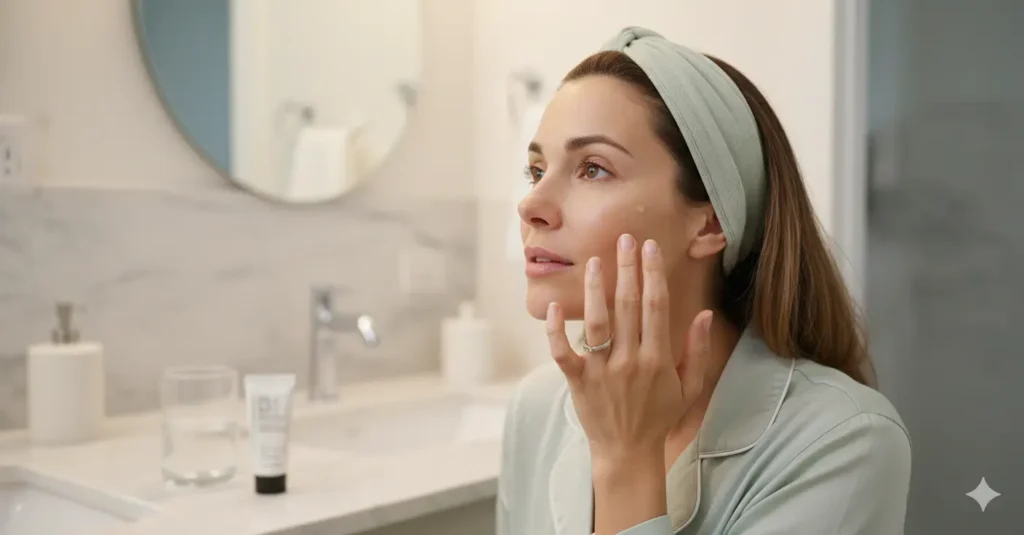
Nighttime is perfect for retinoids since they increase photosensitivity. Apply a pea-sized amount to clean, dry skin, avoiding the eye area unless using a specific eye retinol.
Retinoid Starter Guide:
- Week 1-2: Apply 2 nights per week
- Week 3-4: Increase to every other night
- Week 5+: Build up to nightly if tolerated
Expect mild dryness, flaking, or redness initially—this “retinization” period typically lasts 4-6 weeks. If irritation persists, reduce frequency or buffer by applying moisturizer first.
Important Note: Retinoids thin the outer dead skin layer while building deeper skin structure. Always use SPF during the day when using retinoids.
Step 4: Niacinamide or Peptide Serum (Optional)
On nights you’re not using retinoids or if your skin tolerates layering, apply a niacinamide or peptide serum for additional anti-aging benefits. These gentler actives complement retinoid work without causing irritation.
Step 5: Rich Night Moisturizer
Your evening moisturizer should be richer than your daytime formula, providing intensive overnight repair. Look for:
- Ceramides to strengthen skin barrier
- Fatty acids for deep nourishment
- Peptides for collagen support
- Antioxidants like vitamin E
Apply generously, using massage motions to boost circulation. The increased blood flow delivers nutrients and oxygen to skin cells.
Step 6: Eye Cream
Use a more intensive eye treatment at night focusing on repair rather than depuffing. Ingredients like retinol (in low concentrations), peptides, and hyaluronic acid work overnight to address fine lines and crepiness.
Age-Specific Anti-Aging Strategies
In Your 20s: Prevention Focus
Your twenties are about preventing future damage. Establish these habits:
- Daily SPF 50 sunscreen without exception
- Gentle vitamin C serum for antioxidant protection
- Basic hydrating routine with occasional retinol (1-2x weekly)
- Annual skin checks for early detection of changes
In Your 30s: Early Intervention
Fine lines and subtle volume loss begin. Upgrade your routine:
- Consistent retinol (0.25-0.5%) 3-4 nights weekly
- Vitamin C serum daily
- Peptide-rich moisturizers
- Eye cream becomes essential
- Consider professional treatments like chemical peels
[Internal Link Suggestion: “Skin Care Ingredients Explained: What These 10 Actives Actually Do”]
Anchor Text: understanding anti-aging ingredients
In Your 40s and Beyond: Active Treatment
More pronounced wrinkles, loss of elasticity, and pigmentation issues require stronger intervention:
- Prescription-strength tretinoin if possible
- Layered peptide and growth factor serums
- Rich, barrier-supporting moisturizers
- Professional treatments (laser, microneedling, injectables)
- Neck and hand care become priorities
Lifestyle Factors That Support Youthful Skin
Topical products work best when supported by healthy lifestyle choices:
Sleep Quality:
During deep sleep, growth hormone peaks, stimulating cell regeneration and collagen production. Aim for 7-9 hours nightly. Sleep on your back to prevent compression wrinkles from pillow contact.
Nutrition for Skin Health:
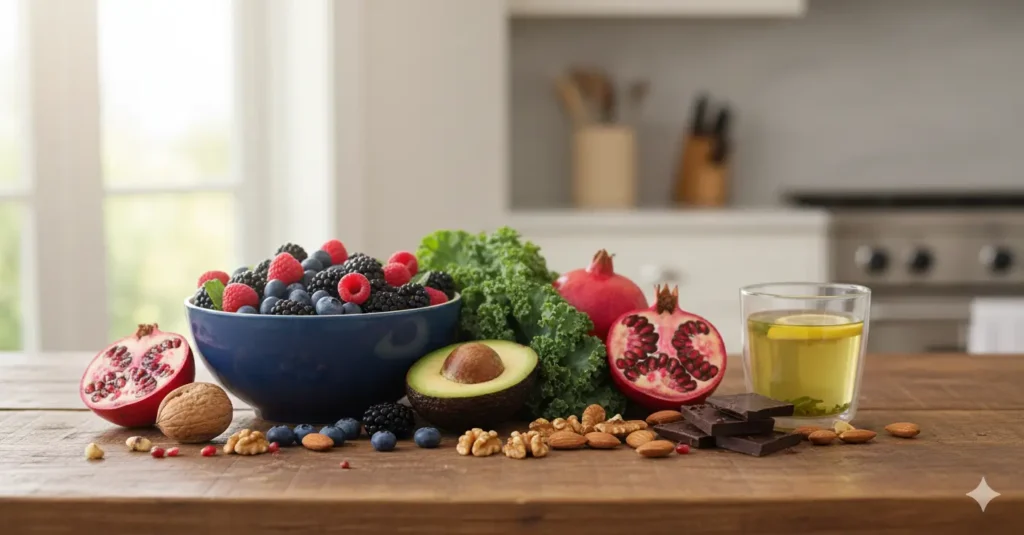
- Antioxidant-rich foods (berries, leafy greens) combat free radicals
- Omega-3 fatty acids (salmon, walnuts) support skin structure
- Vitamin C from diet aids collagen synthesis
- Stay hydrated—aim for 8 glasses of water daily
Stress Management:
Chronic stress elevates cortisol, breaking down collagen and accelerating aging. Practice stress-reduction techniques like meditation, yoga, or regular exercise.
Exercise:
Regular physical activity increases circulation, delivering oxygen and nutrients to skin cells while removing toxins. Aim for 30 minutes of moderate exercise most days.
Avoid Smoking and Limit Alcohol:
Smoking dramatically accelerates skin aging by constricting blood vessels and damaging collagen. Excessive alcohol dehydrates skin and generates inflammation.
Realistic Expectations: What Results to Expect and When
Anti-aging skincare requires patience and consistency. Here’s a realistic timeline:
Weeks 1-4:
Improved hydration and radiance. Skin feels softer and more supple. Fine surface lines may appear plumper due to better moisture retention.
Weeks 4-8:
Texture refinement becomes noticeable. Pores appear smaller, and skin tone begins evening out. Mild irritation from retinoids subsides.
Weeks 8-12:
Fine lines start softening. Age spots gradually fade. Skin firmness improves slightly as collagen production increases.
3-6 Months:
Significant improvement in overall skin quality. Deeper wrinkles soften but don’t disappear. Enhanced glow and more youthful appearance. This is when most people see dramatic “before and after” differences.
6-12 Months:
Maximum benefits from topical products achieved. Continued use maintains results and provides ongoing protection against new damage.
Remember: Topical products can’t deliver results equivalent to cosmetic procedures. They improve skin quality and slow aging but won’t eliminate deep wrinkles or restore significant volume loss.
When to Consider Professional Treatments
Skincare products have limits. Consider professional options if you want to:
- Address deep wrinkles or severe volume loss
- Treat advanced sun damage or extensive pigmentation
- Achieve more dramatic results faster
- Complement your at-home routine with stronger interventions
Professional anti-aging treatments include:
- Chemical peels for exfoliation and renewal
- Microneedling with PRP for collagen stimulation
- Laser treatments for pigmentation and texture
- Injectables (Botox, fillers) for wrinkles and volume
- Prescription treatments stronger than OTC options
Conclusion: Aging Gracefully with Science on Your Side
Anti-aging skincare isn’t about chasing eternal youth or erasing every line—it’s about maintaining healthy, resilient skin that ages gracefully. The science is clear: retinoids, vitamin C, sunscreen, and supportive ingredients deliver measurable results when used consistently over time.
Start with the basics, introduce active ingredients gradually, and give your routine at least 3 months before expecting visible transformation. Combine your skincare with healthy lifestyle habits for comprehensive anti-aging benefits.
Remember that aging is natural and beautiful. These strategies help you look and feel your best at every age, not turn back time. Your skin tells your story—these tools just help you control how that story unfolds.
Frequently Asked Questions
At what age should I start using anti-aging products?
Prevention is easier than correction, so starting in your mid-to-late twenties is ideal. Focus on sunscreen, antioxidants like vitamin C, and basic retinol. However, it’s never too late to start—your skin benefits from quality care at any age. In your thirties and beyond, increase active ingredient concentrations and consistency. The best time to start was yesterday; the second-best time is today.
Can I use retinol and vitamin C together?
Yes, but use them at different times. Apply vitamin C in the morning for daytime antioxidant protection, and use retinol at night when your skin repairs itself. Using both in the same routine can cause irritation and reduce effectiveness. If you want to use both at night, apply vitamin C first, wait 30 minutes, then apply retinol—though this increases irritation risk.
Do expensive anti-aging products work better than affordable ones?
Not necessarily. What matters is ingredient concentration, formulation stability, and your skin’s response—not price tag. Many affordable brands (CeraVe, The Ordinary, Neutrogena) contain the same proven ingredients as luxury options. However, expensive products may use more elegant textures, advanced delivery systems, or higher concentrations. Read ingredient lists and choose based on actives, not marketing.
How long before I see results from retinol?
Most people notice improvements in 8-12 weeks, with maximum benefits appearing around 6 months. Initial results include better texture and hydration. Fine line reduction takes longer as collagen rebuilding is gradual. Be patient and consistent—retinoids work, but they’re not instant. If you see no improvement after 4 months of consistent use, consider increasing concentration or frequency.
Will anti-aging products prevent me from needing cosmetic procedures?
Quality skincare can delay the need for procedures and enhance their results, but topical products have limits. They can’t replace lost volume, lift sagging skin, or eliminate deep wrinkles like procedures can. Think of skincare as maintenance and prevention, while procedures offer more dramatic correction. Many people combine both approaches—maintaining excellent skincare while strategically using professional treatments for specific concerns.